What was signed, not what was typed.
We read the agreement itself, including the amendments, emails and side notes around it.
The commitment. What each customer agreed to pay.
We read the agreement itself, including the amendments, emails and side notes around it.
Not once a year, and not a sample.
The clause sits next to the record it governs, and nothing counts until your experts confirm it. Each rule is set once and kept, so the answer is the same every morning.
In price increases due on a date, in index linkage, in discounts that were meant to expire. Billing runs on the price that was set up when the contract started. The contract said the price would move. Nobody moved it.
Illustration. Fictional company and figures.
A customer contract sets a 3% price increase on 1 April each year.
The billing system still carries the price from the year the contract was signed.
Every invoice since April is short by 3%, and the shortfall compounds the next April.
Evenrow shows the increase clause next to each invoice and the amount you were owed and did not charge.
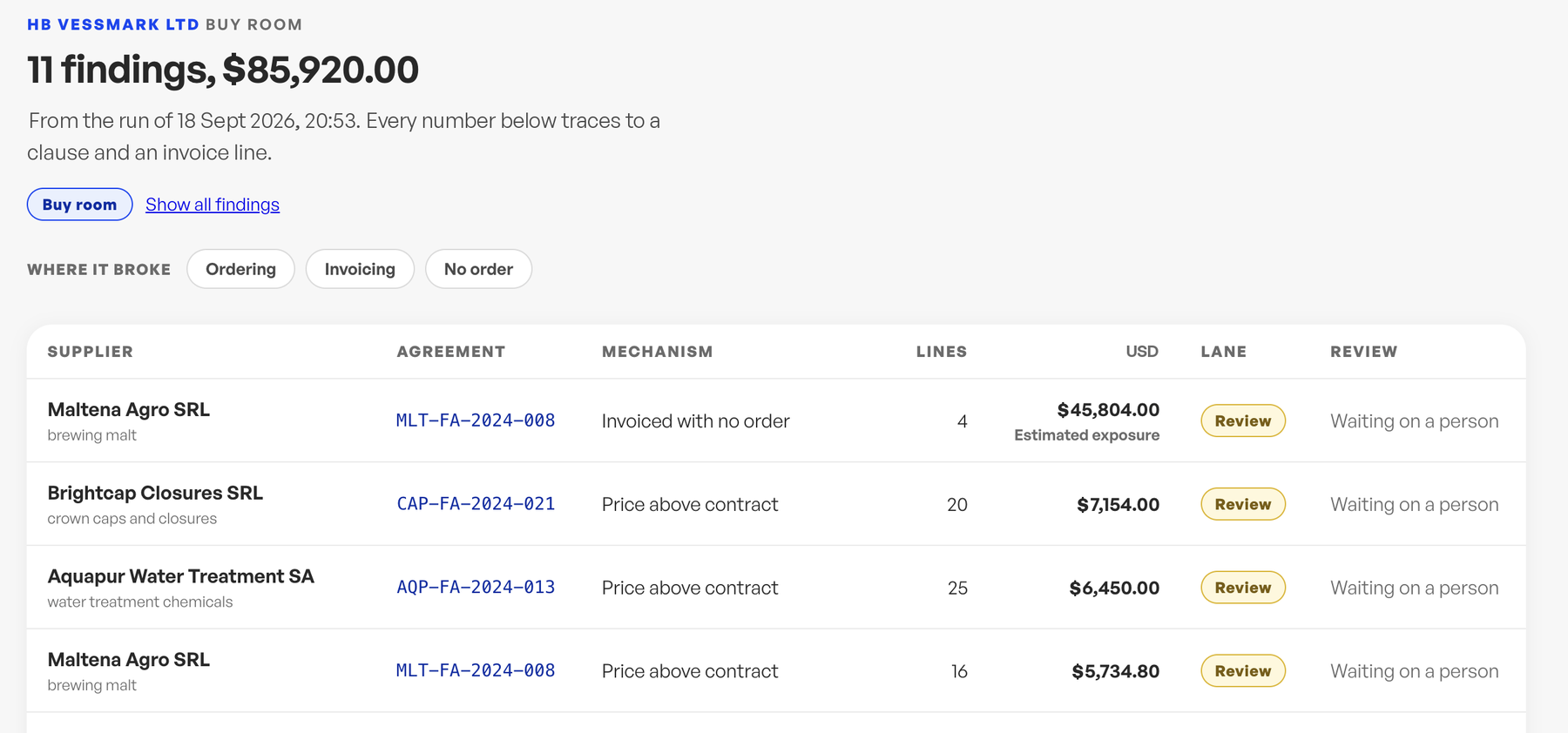
Every customer invoice since yesterday, against the contract in force for that customer. Invoices at the contracted price are shown as clean. Invoices below it show the clause and the amount not charged. This page is about money you are owed. Trade terms against volume is about money you give.
One process, one month, on data exports, no integration. You choose the process. We read the agreements and the exports, and a month later your team opens this page on your own records.
Send us the exports for one process. A month later your team sees every record of that process against the agreements that govern it, with the clause next to each one.
contact@evenrow.ai