What was signed, not what was typed.
We read the agreement itself, including the amendments, emails and side notes around it.
The commitment. Prices, discounts, rebates and payment terms agreed with each supplier.
We read the agreement itself, including the amendments, emails and side notes around it.
Not once a year, and not a sample.
The clause sits next to the record it governs, and nothing counts until your experts confirm it. Each rule is set once and kept, so the answer is the same every morning.
In amendments, in price updates sent by email, in index-linked prices that were meant to move both ways. The system holds the price someone keyed in on the day the agreement was signed, and every invoice since has been checked against that, not against the agreement.
Illustration. Fictional company and figures.
A packaging supplier's price is linked to a resin index, reviewed quarterly.
The index rose in the first quarter. The supplier sent a new price by email and the system was updated.
The index fell in the second and third quarters. No email came. The invoices kept the higher price.
Evenrow shows the index clause next to each invoice line and the difference for the two quarters.
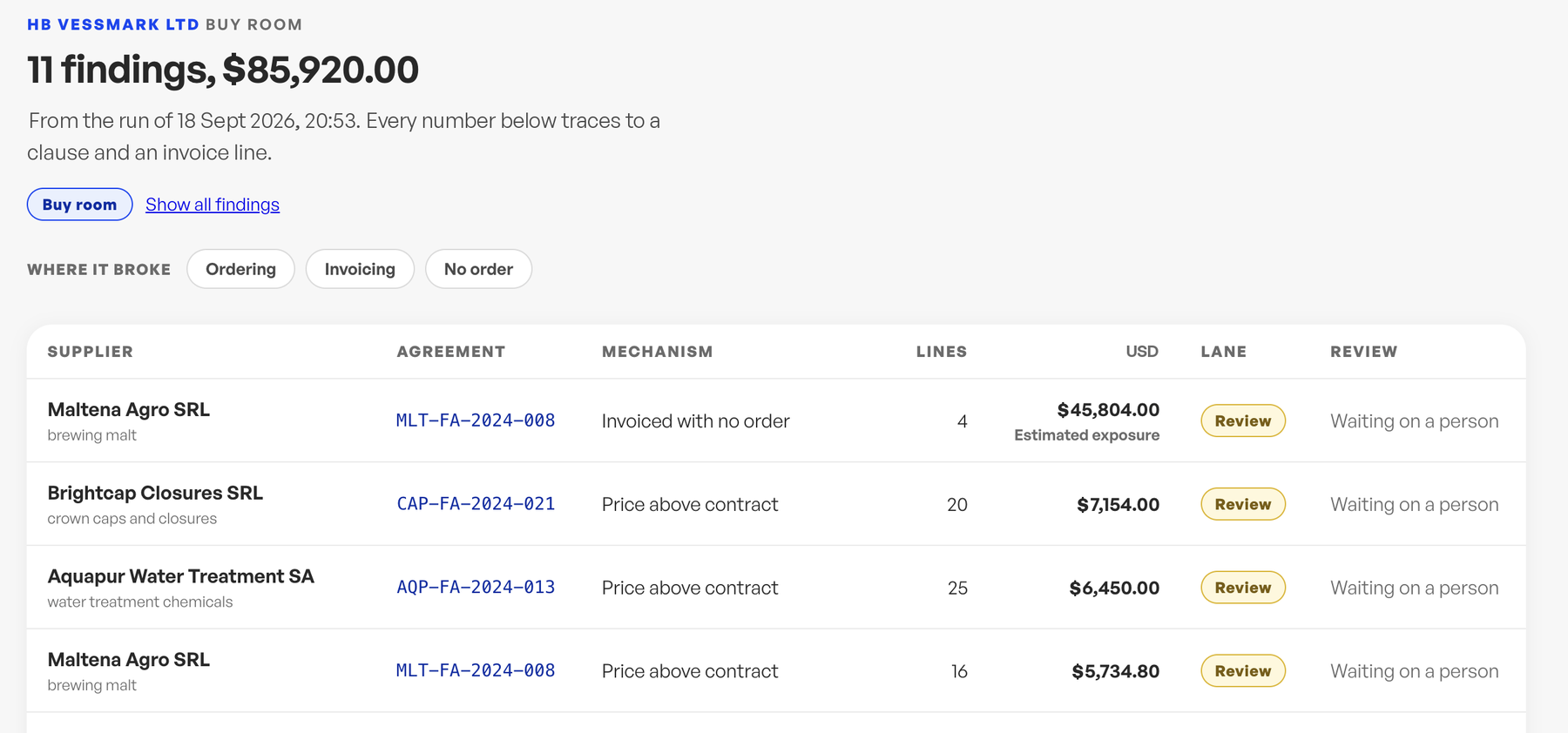
Every invoice line that arrived since yesterday, against the supplier agreement in force for that line. Lines that match are shown as clean, with what was checked. Lines that do not match show the clause and the gap in money, waiting for a decision.
One process, one month, on data exports, no integration. You choose the process. We read the agreements and the exports, and a month later your team opens this page on your own records.
Send us the exports for one process. A month later your team sees every record of that process against the agreements that govern it, with the clause next to each one.
contact@evenrow.ai